Use of cookies

We use cookies to improve and analyse your browsing experience on our web. You can accept these cookies, reject them or choose your settings by clicking on the corresponding buttons. Please note that rejecting cookies may affect your browsing experience. For more information you can consult our Cookies policy.

Configure cookies

Cookies are an essential part of how our web works. The main goal of cookies is to make your browsing experience more comfortable and efficient and to improve our services and the web itself.
Here you can find all the information about the cookies we use and you can activate and/or deactivate them according to your preferences, except for those cookies that are strictly necessary for the operation of the web. Blocking some cookies may affect your experience on the web and how the site works. For more information you can visit our Cookie Policy.

Strictly necessary (technical) cookies

These Cookies are necessary for the web to function and cannot be disabled on our systems. They are generally only set up in response to actions you may take such as requesting services, setting your privacy preferences, logging in or completing forms. You can set your browser to block or warn you about these cookies, but some parts of the web will not work. Information about Cookies.

Analytical cookies

These Cookies allow us to count the number of visits and traffic sources so that we can measure and improve the performance of our site. They help us to find out which pages are the most popular and least popular, and to see how visitors move around the web. All information collected by these Cookies is aggregated and therefore anonymous. If you do not allow these Cookies we will not know when you visited our web. Information about Cookies.

Third party cookies

These cookies are used to analyse your activity in order to show you personalised advertisements. Information about Cookies.

Accept Decline Configure cookies Confirm selected
Search
×
Notes
Search
There are no notes
  • 2 Plants
  • To customise Pencil press Alt + Down Arrow
  • To customise Highlighter press Alt + Down Arrow

    Change theme

    Error - please check your internet connection...
    Back

    Blink Help

    x
    Error - please check your internet connection...

    How can we help you?

    No results

    View full manual

    Couldn't find what you were looking for?

    Please describe the issue you are experiencing and provide as many details as possible. Let us know the book, class, access device, licence code, username, used browser or if it occcurs in our app:

    Thickness:
    Font size:
    Filter
      No resources found
      Font size:
      Revision mode

      Revision mode

      2 Plants
      2. Plants
      Without background sound
      Logo

      Plants

      What do you already know?

      1. In the image you can see plants from the jungle and plants from the desert. What differences are there between the vegetation in these two places?

      1. Study the picture. Can you find…...

      1 ... an insect?

      2 ... three living beings that live off plants?

      3 ... a way that a plant protects itself from being eaten?

      1. How do you think plants survive in the desert if there is no water?

      Reading and Listening: Amazing plants

      Vocabulary

      1. Match the words to their definitions.

      1 nettles

      2 drought 

      3 scent 

      4 toxic 

      a) Smell.

      b) Plants with hairs that contain toxic substances.

      c) Poisonous.

      d) A period of time without rain.

      1 →   2 →   3 →   4 →   5 →

      1. Look at the drawings of the insects and plants above. Find a sentence in the text that describes what is happening in each one.

      1. Look at the image. What is the oldest plant life on the planet? What is the most recent arrival?

      2 Plants
      2. Plants
      Without background sound
      Logo

      What are plants?

      Plants are essential to produce oxygen and food for other living beings. All life on Earth depends on plants.

      Let's look in more detail at plants. In general, plants:

      • Are multicellular living organisms with autotrophic nutrition and tissues.
      • Have specialised organs that carry out the different vital functions. The exceptions are mosses and other similar plants, which have tissues but do not have organs.
      • Most plants have a basic body structure, with a root, stem, leaves and vessels.
      1. Write the answers to the following questions. 

      ​​1 Are plants multicellular or unicellular?

      2 What four parts make up the basic body structure of most plants?

      3 Plants can produce the nutrients that they need from the environment around them. What is this type of nutrition called?

      ...........  
       
      Sci-find

      How do people use plants?

      1. Look at your environment and the things in it.


      1. Try to find at least 10 different ways that we use plants in everyday life.

      Parts of a plant

      Let's take a closer look at the anatomy of a plant.

      • •The roots fix the plant to the ground. Roots can be different shapes; they usually branch out, and there are tiny hairs on the ends of these branches, called root hairs. These root hairs allow water and minerals from the soil to enter the plant.
      • •The stem is usually above the surface of the soil and holds up the rest of the plant. A stem may have branches or it may not. Stems can be thin, green and flexible. When they are thick and woody, they are called trunks.
      • •The leaves are normally green, flat and have veins running through them. They join to the stem of the plant by the stalk, which is also known as the petiole. Leaves have two sides.

      The upper side of the leaf is bright green and shiny.

      The lower side of the leaf is lighter green and has small openings, called stomata. Stomata join the inside of the plant with the external environment and can open and close.

      • •The vessels are tube-shaped cells which run through the inside of the root, stem, branches and the veins of the leaves. Water and other substances flow through them.
      1. Complete the table showing the four parts of a plant and their functions.

      Parts of a plant Function
      1. Draw a leaf and label its parts.


      1. Does a plant always need a stem? Explain your answer.

      2 Plants
      2. Plants
      Without background sound
      Logo

      The nutrition function in plants

      Plants carry out autotrophic nutrition. This means that they produce the nutrients that they need from substances they obtain from the environment around them. They distribute the substances throughout their cells, respire and eliminate waste.

      Absorbing substances a)

      • Plants absorb water and minerals from the soil through their root hairs. This mixture is called xylem sap. It travels through the vessels of the plant and is distributed throughout the plant.
      • Plants also absorb carbon dioxide from the air through the stomata.

      Photosynthesis b)

      Photosynthesis is when plants use energy from sunlight to make nutrients.

      This process takes place inside the cells of the green parts of the plant, mostly in the leaves. These cells contain a green substance called chlorophyll that absorbs the Sun's energy.

      The plant uses this energy to change xylem sap and carbon dioxide into carbohydrates, which, together with water, form phloem sap. The sap is distributed through the plant's vessels.

      Luckily for us, photosynthesis produces oxygen as a waste gas!

      Respiration c)

      Plants are constantly respiring; when they respire, they absorb oxygen.

      A plant's cells use oxygen to transform the carbohydrates contained in phloem sap. This is how plants obtain energy and other substances they need in order to grow. They also store some of these substances in their roots, leaves and fruit.

      These processes generate carbon dioxide as a waste gas.

      Expelling waste d)

      Through their stomata, plants expel the oxygen produced during photosynthesis. They also expel the carbon dioxide produced when they use their nutrients and excess water in the form of vapour.

      1. Name three substances that plants absorb from the environment.

      1. Describe the process of photosynthesis using the following words: carbon dioxide, chlorophyll, oxygen, phloem sap, sunlight, energy, xylem sap.

      1. Describe the process of respiration using the following words: carbon dioxide, oxygen, phloem sap, energy, carbohydrates.

      1. What is a waste product of photosynthesis? Why is it important for humans?

      1. These sentences are false. Correct them.

      1 Plants do not consume oxygen.

      2 Plants only respire at night.

      3 Plants produce oxygen at night.

      When plants carry out photosynthesis, they also absorb some carbon dioxide from the atmosphere.

      Sci-find
      1.  Find out how carbon dioxide can damage the environment.
      2. Find out how much carbon dioxide an average-sized tree can absorb.
      3. Are there any other ways to absorb the carbon dioxide in the atmosphere?


      2 Plants
      2. Plants
      Without background sound
      Logo

      The interaction function in plants

      Even though plants do not have sense organs and cannot move from one place to another, they carry out the interaction function: they are able to react to changes in their environment.

      • Plants adjust some of their vital functions to the different seasons of the year. They produce flowers in spring and many lose their leaves in autumn.
      • Some plants respond to light by growing towards it.
      • Some plants respond to contact. Climbing plants, for example, wrap themselves around supporting objects.
      • Other plants can move quickly when they come into contact with other living organisms. For example, some plants, like Venus Flytraps, close as soon as an insect touches them.

      1. Name four ways that plants react to changes in their environment.

      1. Work with a partner. Think of ways of conducting experiments to prove the interaction functions of plants. Write your ideas and use drawings to help explain them. Share your ideas with your class.

      2 Plants
      2. Plants
      Without background sound
      Logo

      The reproduction function in plants

      All plants can reproduce, that is, produce descendants. Plants carry out sexual and asexual reproduction.

      Sexual reproduction. Plants that carry out sexual reproduction have female and male reproductive cells, which join together to form a new plant. In most plants, the reproductive cells are produced in organs called flowers and sexual reproduction is carried out through seeds.
      Flowers are reproductive organs. A typical flower has:

      • A pistil, which is the female part of the flower. It produces female reproductive cells (called ovules).
      • A number of stamens, which make up the male part of a flower. They produce pollen grains, which contain male reproductive cells.
      • Some flowers also have groups of special leaves, called sepals, that form the calyx, and petals that form the corolla.

      Asexual reproduction. In asexual reproduction, a part of the plant develops into new smaller plants. For example, certain plants produce descendants from their branches or roots, while mosses and ferns produce spores.

      1. Explain the difference between sexual and asexual reproduction in plants.

      1. Read the information above. Then, in your own words, explain to a partner how plants reproduce.

      2 Plants
      2. Plants
      Without background sound
      Logo

      Sexual reproduction in seed plants

      In seed plants, the sexual reproduction process consists of four stages:

      • •Pollination. A grain of pollen from one flower (transported by the wind or insects) reaches the pistil of another flower.

      • •Fertilisation. The male cells in the grain of pollen join together with the ovules inside the pistil.

      • •Seed and fruit formation. After fertilisation, the pistil develops into a fruit and the fertilised ovules develop into seeds. The seeds are dispersed.
      • Germination. Seeds that reach soil with the right conditions germinate. In other words, they develop and grow into a new plant.

      1. Complete the sentences with one of the words in the box

      1 Wind and insects flowering plants.

      2 The male cells  with the ovules inside pistil.

      3 The pistil develops into a  .

      4 The ovules develops into  .

      5 After the dispersal of the seeds, if they find the correct conditions, they will  . 

      2 Plants
      2. Plants
      Without background sound
      Logo

      Asexual reproduction of plants

      In asexual reproduction, a part of the plant develops into new, smaller plants. For example:

      • Some plants have branches called stolons. They grow near to the earth. Stolons can grow roots and new plants.

      • Other plants, like onions, form special stems called bulbs. They survive when the plant dies down during winter and develop into another plant the following spring.

      • Mosses and ferns produce spores, which are cells inside a shell or tough coat. Spores reproduce when they fall on moist ground.

      1. What is the difference between how plants with stolons and plants with spores reproduce?

      1. Look at the image.

      1 What type of asexual reproduction does it show?

      2 Explain this process of asexual reproduction.

      1. How do you think bulbs survive in winter?

      2 Plants
      2. Plants
      Without background sound
      Logo

      Apply your skills!

      Project 1 Studying photosynthesis
      Observing the nutrition processes in animals is simple, because we can see clearly how they feed, breathe, etc.

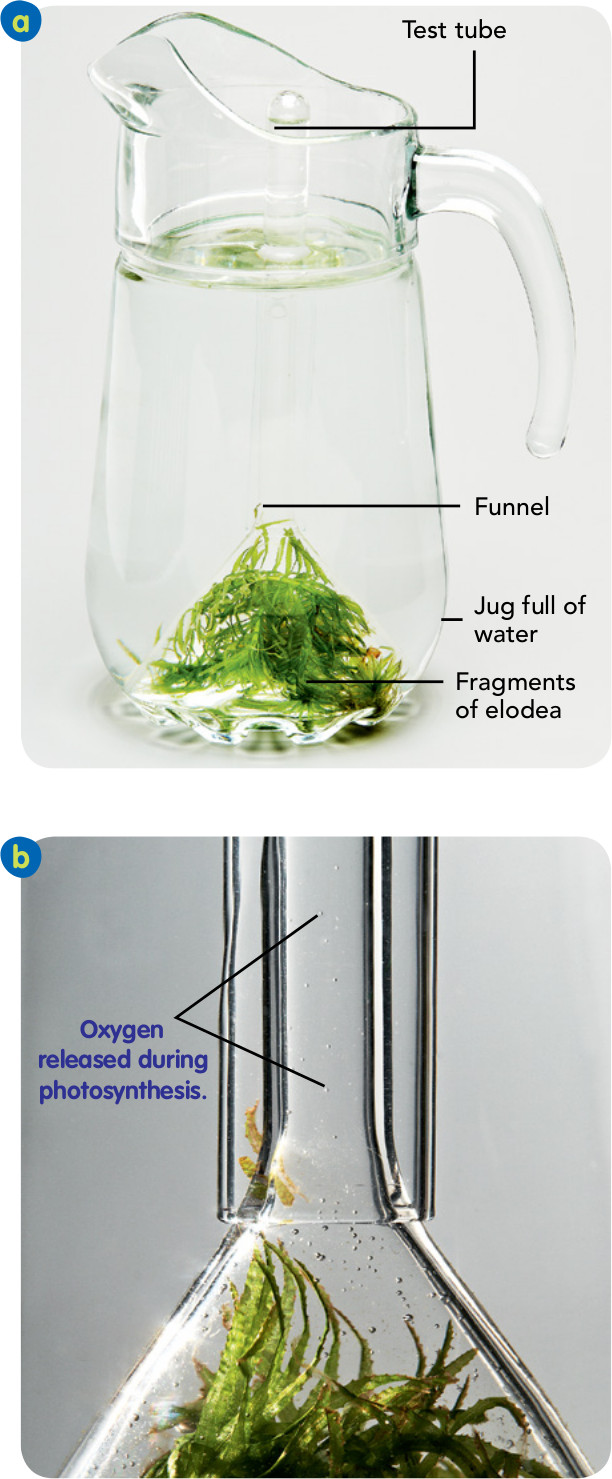
      In plants, these processes are not so evident. However, we can do a simple experiment which will enable us to observe photosynthesis in plants.

      Materials

      Fragments of an aquatic plant, such as elodea.

      A transparent jug full of water.

      A funnel (also transparent).

      A test tube completely full of water.

      Procedure

      Step 1 Take the fragments of elodea and put them in the funnel, pushing them gently against the neck of the funnel to ensure they stay in place.

      Step 2 Put the funnel containing the elodea into the jug, upside-down, ensuring that the funnel is completely submerged. Your jug should look like the one in picture a.

      Step 3 Place the plant in the sun and, at an adequate temperature, you will soon see how small bubbles form, which rise up through the neck of the funnel. The gas which is released is oxygen produced in photosynthesis (picture b).

      Step 4 Document your results and write your conclusion.

      Project 2 Studying leaves and trees

      Identifying leaves

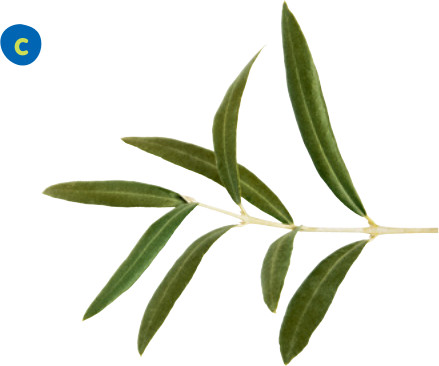
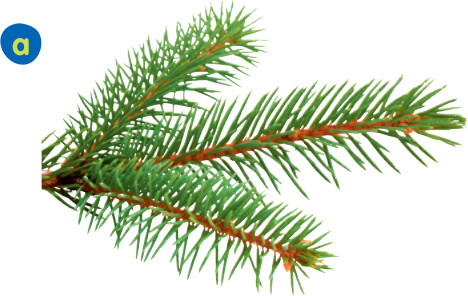
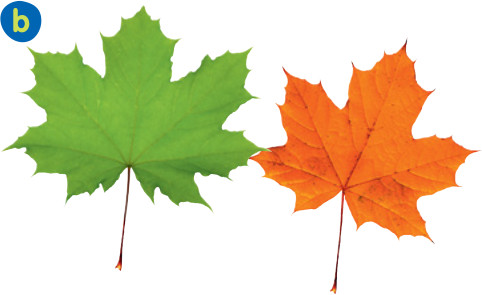
      Read the description of each of the tree's leaves and match it to the image.

      • The maple tree

      The leaves of this tree change colour dramatically in autumn. Its leaves have between three and five pointed lobes that are spread out like a small hand fan.

      • The olive tree

      The leaves of this tree are long and oval-shaped. They have a dark green upper surface and a lighter lower surface.

      • The fir tree

      These trees have needles instead of traditional leaves. They are short, flat, spiky and remain green all year round.
      Studying trees

      Step 1 Choose one of your favourite trees to study.

      Step 2 Observe its leaves.

      Step 3 Draw a picture of the leaf or take a photograph of it.

      Step 4 Take one of the leaves that has fallen to the ground and paint one side of it. Press the painted side onto a piece of paper so that its impression is left on the paper. Make sure you can see the details.

      Step 5 Observe the tree's trunk.

      Step 6 Do a bark rubbing of the tree. This is done by taking a piece of paper and a pencil or crayon, placing the paper on the bark and rubbing the pencil or crayon on the paper until the pattern of the bark can be seen on the paper.

      Step 7 In the library or on the Internet, investigate as many facts as you can about the tree.

      Step 8 Put all of the information into a 4-page leaflet to present in class.

      Step 9 Display your leaflets on the classroom wall!

      2 Plants
      2. Plants
      Without background sound
      Logo

      Check what you know!

      1. Complete the sentences.

      1 Plants carry out nutrition.

      2 Plants produce and for other living beings.

      3 The transformation of sunlight into energy by plants is called .

        photosynthesis autotrophic oxigen food

      Done
      2 Plants
      2. Plants
      Without background sound
      Logo


      1. Write the words that are missing from boxes A, B, C and D.


        A  

        B  

        C  

        D  

        Leaves Roots Vessels Stems

      Done
      2 Plants
      2. Plants
      Without background sound
      Logo


      1. What is the name of the green substance that absorbs the energy from sunlight during photosynthesis?
        Chlorophyl

      Done
      2 Plants
      2. Plants
      Without background sound
      Logo


      1. True or False?
      • All life on Earth depends on plants.
      • Correct answer
        Wrong answer

      Done
      2 Plants
      2. Plants
      Without background sound
      Logo


      1. Name three fruits that you can eat. Describe them and say where the seed(s) of each fruit is/are.

      1. Look at the pictures. Explain how they show the interaction function in plants.

      1. Name five ways that we use plants in everyday life.

      2 Plants
      2. Plants
      Without background sound
      Logo


      1. a) Put the four phases of reproduction of seed plants into the correct order.

      Done
      2 Plants
      2. Plants
      Without background sound
      Logo


      b) Write a description of each phase.

      2 Plants
      2. Plants
      Without background sound
      Logo


      1. Which of the four phases of reproduction of seed plants is taking place in the photograph?

      • germination

      • Correct answer
        Wrong answer
      • seed and fruit formation

      • Correct answer
        Wrong answer
      • pollination

      • Correct answer
        Wrong answer
      • fertilisation

      • Correct answer
        Wrong answer

      Done
      2 Plants
      2. Plants
      Without background sound
      Logo


      1. Copy the drawing of the flower and label the parts.

      1. Explain how asexual reproduction takes place in the following plants.

      ,
      You have completed the lesson!

      Below is the time you have spent on the activity and the score you obtained.

      Time spent

      Score

      1. 1
      2. 2
      3. 3
      4. 4
      5. 5
      6. 6
      7. 7
      8. 8
      9. 9
        Eraser
        Rich text editor
        close