tester

Use of cookies

We use cookies to improve and analyse your browsing experience on our web. You can accept these cookies, reject them or choose your settings by clicking on the corresponding buttons. Please note that rejecting cookies may affect your browsing experience. For more information you can consult our Cookies policy.

Configure cookies

Cookies are an essential part of how our web works. The main goal of cookies is to make your browsing experience more comfortable and efficient and to improve our services and the web itself.
Here you can find all the information about the cookies we use and you can activate and/or deactivate them according to your preferences, except for those cookies that are strictly necessary for the operation of the web. Blocking some cookies may affect your experience on the web and how the site works. For more information you can visit our Cookie Policy.

Strictly necessary (technical) cookies

These Cookies are necessary for the web to function and cannot be disabled on our systems. They are generally only set up in response to actions you may take such as requesting services, setting your privacy preferences, logging in or completing forms. You can set your browser to block or warn you about these cookies, but some parts of the web will not work. Information about Cookies.

Analytical cookies

These Cookies allow us to count the number of visits and traffic sources so that we can measure and improve the performance of our site. They help us to find out which pages are the most popular and least popular, and to see how visitors move around the web. All information collected by these Cookies is aggregated and therefore anonymous. If you do not allow these Cookies we will not know when you visited our web. Information about Cookies.

Third party cookies

These cookies are used to analyse your activity in order to show you personalised advertisements. Information about Cookies.

Accept Decline Configure cookies Confirm selected
Search
×
Notes
Search
There are no notes
  • Colonial rule
  • To customise Pencil press Alt + Down Arrow
  • To customise Highlighter press Alt + Down Arrow

    Change theme

    Error - please check your internet connection...
    Back

    Blink Help

    x
    Error - please check your internet connection...

    How can we help you?

    No results

    View full manual

    Couldn't find what you were looking for?

    Please describe the issue you are experiencing and provide as many details as possible. Let us know the book, class, access device, licence code, username, used browser or if it occcurs in our app:

    Thickness:
    Font size:
    Filter
      No resources found
      Font size:
      Revision mode

      Revision mode

      Colonial rule
      Imperialism, war and revolution
      Without background sound

      Types of rule in colonial territories

      I will know

      The main types of rule in colonised territories, their economic exploitation and the impact that colonialism had on different societies and cultures.


      The European powers established three main types of rule in colonised territories.

      Think


      Colonies
      Protectorates
      Spheres of influence

      The colonised nation lost all sovereignty to the colonising power, which controlled every aspect of government. One example was the Belgian Congo.

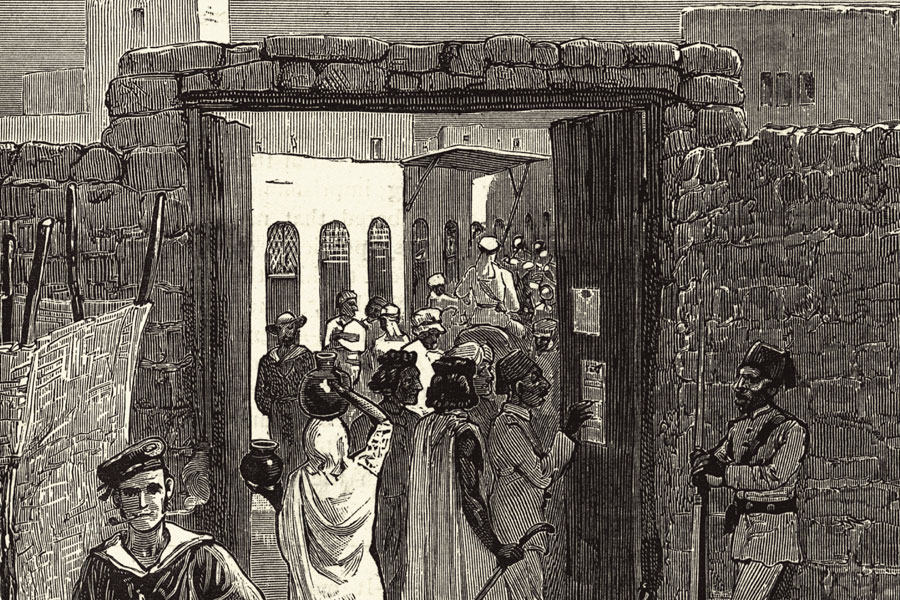
      The colonial power controlled the foreign policy and wealth of the colonised nation. However, local authorities were in charge of domestic policy. Examples included Britain in Egypt, and France and Spain in Morocco.


      What's in the image?

      19th-century engraving of people reading the proclamation of the British protectorate in Suakin, Sudan.

       

      Independent countries were forced to cede trade advantages to colonial powers. In China, for example, the introduction of western products ruined trade for local merchants, leading to several rebellions.


      Colonial rule
      Imperialism, war and revolution
      Without background sound

      Social structure and infrastructure

      The colonisers formed part of the elite class of colonial society: they controlled the economy and held high positions in business and government.

      Natives were considered inferior and were marginalised: they were forced to live in separate areas, they were refused entry into certain places, etc.

      What's in the image?

      British East India Company officer guarded by soldiers.


      Colonial rule
      Imperialism, war and revolution
      Without background sound

      Long lasting problems

      Cultural
      awareness
      and expression
      competence

      Cultural awareness and expression

      Competence in cultural awareness and expression involves understanding and respecting the importance of diversity and how ideas and meaning are creatively expressed and communicated in different cultures through a range of arts and other cultural forms.

      Multilingual
      competence

      Multilingual competence

      Multilingual competence is the ability to use different languages appropriately and effectively for communication.

      It includes historical aspects and value and respect for linguistic and cultural diversity to build democratic coexistence.


      Sustainable
      Development
      Goals

      Reduce inequality within and among countries.

      Colonialism introduced modern government and political organisation in colonised nations.

      However, colonial borders were often drawn without taking into account the tribal, linguistic or religious differences of the local population. This caused severe conflicts, many of which have lasted until today.

      Think and share

      Imagine you live somewhere in the 19th century that has become another country's colony. How would you feel? Debate in class.

      Colonial rule
      Imperialism, war and revolution
      Without background sound

      Plantation and extraction economic exploitation


      Sustainable
      Development
      Goals

      Ensure sustainable consumption and production patterns.

      The mother countries exploited their colonies' natural resources for their own benefit. Colonial economies were based on plantation agriculture and the extraction of minerals.

      What's in the image?

      Advertisement from around 1900, showing a French colonial trading post in Africa.


      Interpret an advertisement

      1. Describe the illustration. Who is in the scene and where are they? What are they doing?

      2. What message do you think the advertisement is trying to transmit?

      3. Do you think the advertisement represents reality? Explain your answer.


      Colonial rule
      Imperialism, war and revolution
      Without background sound

      Exploit and abuse

      The colonial powers built transport infrastructure, such as ports and railways, in order to meet their needs, but these often did not benefit the indigenous population who lived mainly in rural and isolated areas, and became a source of cheap labour, working on plantations and in mines in slave-like conditions.

      What's in the image?

      Workers in a cotton plantation in India in 1877.

      The mother countries had no interest in developing industry in the colonies, and local artisans grew poor, as they could not compete with industrial European products.


      Colonial rule
      Imperialism, war and revolution
      Without background sound

      Social and cultural effects

      Cultural
      awareness
      and expression
      competence

      Cultural awareness and expression

      Competence in cultural awareness and expression involves understanding and respecting the importance of diversity and how ideas and meaning are creatively expressed and communicated in different cultures through a range of arts and other cultural forms.

      Colonial rule had a profound impact on many traditional societies around the world.

       
      Demography
      subtitulo

      In some parts of the world, the indigenous population had very little previous contact with people from other places. This meant that they did not have immunity to the diseases brought by the colonisers. Consequently, colonisation had a disastrous demographic impact.

      For example, there was a sharp decline in the indigenous population of Australia in the 19th and early 20th centuries as a result of disease, war and other actions by the British colonisers.

       
      Society
      subtitulo

      Traditional society was transformed by colonisation. The colonisers formed the elite class of colonial society: they controlled the economy and held high positions in business and government. Indigenous people were considered inferior and were marginalised.

      For example, they were forced to live in separate areas, were refused entry to certain places, etc.

       
      Culture
      subtitulo

      Western customs spread among indigenous peoples, and their elite studied in European universities and became westernised. Over time, the process of acculturation had great influence everywhere. People's clothes, beliefs and even the languages that they spoke were all transformed.


      What's in the image?

      Europeans having a picnic in British India in 1890.


      Think and write

      with a partner, list the negative effects of imperialism on colonised nations. Were there also positive effects? Share your thoughts in class.

      Colonial rule
      Imperialism, war and revolution
      Without background sound

      Let's test. Types of rule in colonial territories

      Match the two correct halves of each sentence.

      • The Belgian Congo is...

      • The colonised nation lost...

      • the colonising power controlled...

      • Independent countries were forced to cede...

      • In protectorates, the colonial power controlled...

      • The introduction of western products ruined...

      • Local authorities managed...

      • Spain in Morocco is...

      • trade advantages to colonial powers.

      • trade for Chinese merchants.

      • an example of a protectorate.

      • domestic policy in a protectorate.

      • every aspect of the colonised nation's government.

      • one example of a colony.

      • the foreign policy and wealth of the colonized nation.

      • all sovereignty to the colonising power.

      Done
      Colonial rule
      Imperialism, war and revolution
      Without background sound

      Let's test. Colonisers and colonised

      Choose the correct answer.

      • 1. The colonising powers controlled every aspect of government in...
      • Correct answer
        Wrong answer
      • 2. Local population often could not use colonial infrastructure because...
      • Correct answer
        Wrong answer
      • 3. Colonial economies were based on...
      • Correct answer
        Wrong answer
      • 4. Artisans from the colonies grew poor because…

      • Correct answer
        Wrong answer
      • 5. Colonisation had a disastrous demographic impact because…

      • Correct answer
        Wrong answer

      Done
      Colonial rule
      Imperialism, war and revolution
      Without background sound

      Now I know

       
      Types of rule in colonial territories
      subtitulo

      The European powers established three main types of rule in colonised territories:

      • Colonies, where the colonised nation lost all sovereignty to the colonising power, which controlled every aspect of government.
      • Protectorates, where the colonial power controlled the foreign policy and wealth of the colonised nation, while local authorities dealt with domestic policy.
      • Spheres of influence, where colonial powers forced independent countries to cede trade advantages.

      Colonialism introduced modern government and political organisation in colonised nations. Colonial borders were often drawn without taking into account the tribal, linguistic or religious differences of the local population. This caused severe conflicts, many of which have lasted until today.

       
      Economic exploitation
      subtitulo

      The mother countries exploited the natural resources of their colonies for their own benefit. Colonial economies were based on plantation agriculture and mineral extraction (gold, diamonds, and coal), using indigenous peoples as a source of cheap labour, working in slave-like conditions.

      Private companies from the mother countries took land from the indigenous population and created large plantations (rubber, coffee and tea).

      The mother countries had no interest in developing industry in the colonies, and local artisans grew poor, as they could not compete with industrial European products.

      The colonial powers built port and railway infrastructure for their own needs, not for the local population, who often could not use these means of transportation as they lived in isolated areas.

       
      Social and cultural effects
      subtitulo

      Colonisation had a disastrous demographic impact because indigenous populations in some parts of the world had very little previous contact with people from other places and they did not have immunity to the diseases brought by the colonisers. 

      Traditional society was transformed by colonisation. The colonisers formed the elite class of colonial society: they controlled the economy and held high positions in business and government. Indigenous people were considered inferior and were marginalised.

      Western customs spread among indigenous peoples, and their elite studied in European universities and became westernised. Over time, the process of acculturation (the adaptation of one culture to another) had great influence everywhere. People's clothes, beliefs and even the languages that they spoke were all transformed.


       Summary. Colonial rule 

      Colonial rule
      Imperialism, war and revolution
      Without background sound

      ASSESSMENT – Colonial rule

      Drag and drop.

      Western customs

      Indigenous

      marginalised

      slave-like

      acculturation

      colonial

      forced

      industrial

      mother

      industry

      elite

      westernised

      local artisans

      plantations

      cheap labour

      colonisation

      society

      borders

      refused

      colonised

      Colonialism introduced modern government and political organisation in nations. However, colonial were often drawn without considering the differences of the local population.  

      The countries had no interest in developing in the colonies, and grew poor, as they could not compete with European products.

      Traditional was transformed by . The colonisers formed the elite class of society.

      people were considered inferior and were . They were to live in separate and isolated areas and were entry to certain places. They became a source of , working on and in mines in conditions.

      spread among indigenous peoples, and their studied in European universities and became . Over time, the process of had great influence everywhere.

        Western customs Indigenous marginalised slave-like acculturation colonial forced industrial mother industry elite westernised local artisans plantations cheap labour colonisation society borders refused colonised

      Done
      Colonial rule
      Imperialism, war and revolution
      Without background sound

      Should art return home?

      Digital competence

      Digital competence

      Digital competence involves the confident, critical and responsible use of, and engagement with digital technologies for learning, working, and for participation in society.

      It includes an understanding of being a digital citizen as well as security, privacy, intellectual property, problem-solving and computational thinking.

      Citizenship
      competence

      Citizenship competence

      Citizenship competence is the ability to act as responsible citizens and to fully participate in civic and social life.

      It includes civic literacy, values in a democratic culture with respect for human rights, reflection on ethical issues of our times and developing a sustainable lifestyle in agreement with the 2030 Agenda for Sustainable Development.

      Cultural
      awareness
      and expression
      competence

      Cultural awareness and expression

      Competence in cultural awareness and expression involves understanding and respecting the importance of diversity and how ideas and meaning are creatively expressed and communicated in different cultures through a range of arts and other cultural forms.

      Many of the finest artistic treasures from around the world are found in great museums like the British Museum in London or the Louvre in Paris. The directors of these museums argue that the objects are very well preserved, and that they are now available for everyone to visit. But the reason they are in British or French museums is that they were collected when those countries were colonial powers, and they were often taken without permission.

      What's in the image?

      The Rosetta Stone at the British Museum.


       Do some research

      Look on the internet for an object from Africa, Asia or Oceania that is now in a European museum.

      ,
      You have completed the lesson!

      Below is the time you have spent on the activity and the score you obtained.

      Time spent

      Score

      1. 1
      2. 2
      3. 3
      4. 4
      5. 5
      6. 6
      7. 7
      8. 8
      9. 9
      10. 10
      11. 11
        Eraser
        Rich text editor
        close