tester

Use of cookies

We use cookies to improve and analyse your browsing experience on our web. You can accept these cookies, reject them or choose your settings by clicking on the corresponding buttons. Please note that rejecting cookies may affect your browsing experience. For more information you can consult our Cookies policy.

Configure cookies

Cookies are an essential part of how our web works. The main goal of cookies is to make your browsing experience more comfortable and efficient and to improve our services and the web itself.
Here you can find all the information about the cookies we use and you can activate and/or deactivate them according to your preferences, except for those cookies that are strictly necessary for the operation of the web. Blocking some cookies may affect your experience on the web and how the site works. For more information you can visit our Cookie Policy.

Strictly necessary (technical) cookies

These Cookies are necessary for the web to function and cannot be disabled on our systems. They are generally only set up in response to actions you may take such as requesting services, setting your privacy preferences, logging in or completing forms. You can set your browser to block or warn you about these cookies, but some parts of the web will not work. Information about Cookies.

Analytical cookies

These Cookies allow us to count the number of visits and traffic sources so that we can measure and improve the performance of our site. They help us to find out which pages are the most popular and least popular, and to see how visitors move around the web. All information collected by these Cookies is aggregated and therefore anonymous. If you do not allow these Cookies we will not know when you visited our web. Information about Cookies.

Third party cookies

These cookies are used to analyse your activity in order to show you personalised advertisements. Information about Cookies.

Accept Decline Configure cookies Confirm selected
Search
×
Notes
Search
There are no notes
  • ESTUDIO DE LA LENGUA
  • To customise Pencil press Alt + Down Arrow
  • To customise Highlighter press Alt + Down Arrow

    Change theme

    Error - please check your internet connection...
    Back

    Blink Help

    x
    Error - please check your internet connection...

    How can we help you?

    No results

    View full manual

    Couldn't find what you were looking for?

    Please describe the issue you are experiencing and provide as many details as possible. Let us know the book, class, access device, licence code, username, used browser or if it occcurs in our app:

    Thickness:
    Font size:
    Filter
      No resources found
      Font size:
      Revision mode

      Revision mode

      ESTUDIO DE LA LENGUA
      Unidad 2. Como la vida misma
      Without background sound
      Logo

      5 El español en el mundo

      A partir del descubrimiento de América, la lengua española se difundió por todos aquellos territorios, extendiéndose por casi toda Sudamérica, Centroamérica y parte de Norteamérica. En la mayoría de los lugares se perdieron las lenguas que allí se hablaban al imponerse el castellano, aunque en otros territorios se han mantenido algunas lenguas indígenas, que ahora son cooficiales junto al español.

      Además de en Hispanoamérica, el español se habla de forma minoritaria en Filipinas, Guinea Ecuatorial y el Sáhara Oriental. Además, los judíos que fueron expulsados de la Península en el siglo xv llevaron consigo su lengua, el castellano sefardí, y la extendieron por los territorios donde se asentaron.

      En total, casi 470 millones de personas tienen el español como lengua materna. Si se incluyen los hablantes de dominio nativo, los de competencia limitada y los estudiantes de español como lengua extranjera, la cifra supera los 548 millones.

      El español es la segunda lengua materna del mundo por número de hablantes, tras el chino mandarín, y también la segunda lengua en un cómputo global de hablantes.
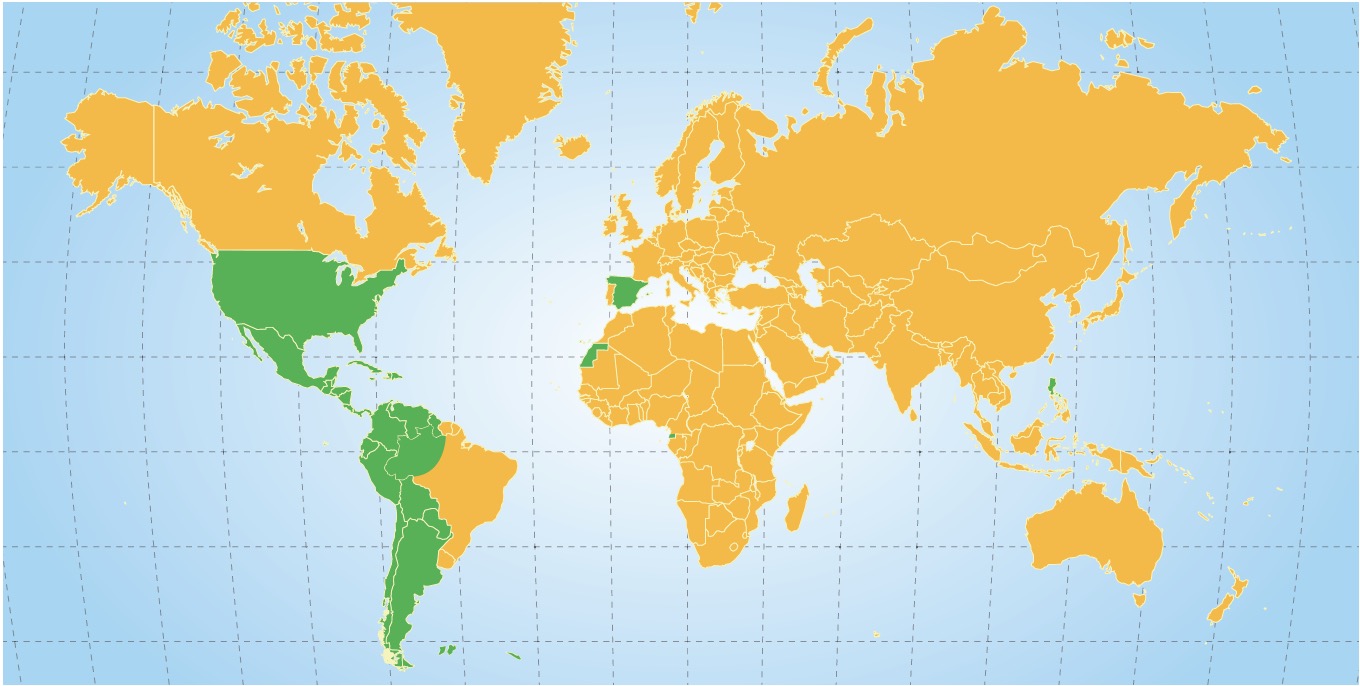

      Figura 2.5. Mapa del español en el mundo.

      ESTUDIO DE LA LENGUA
      Unidad 2. Como la vida misma
      Without background sound
      Logo


      ACTIVIDADES
      subtitulo
      1. El Instituto Cervantes se encarga de la enseñanza y difusión del español por todo el mundo. Investiga en la red en cuántos países existen sedes del Instituto Cervantes, cuándo se fundó y cuáles son sus funciones principales. Después, prepara una presentación con la información que has recabado y exponla ante tus compañeros.


      ESTUDIO DE LA LENGUA
      Unidad 2. Como la vida misma
      Without background sound
      Logo

      El español en el mundo

      Indica cuáles de las siguientes afirmaciones son verdaderas o falsas.
      • El español representa una lengua hablada solamente en el actual territorio del Estado español.
      • Correct answer
        Wrong answer
      • El chino mandarín ejemplifica en la actualidad la lengua materna con más hablantes del mundo.
      • Correct answer
        Wrong answer
      • Alrededor de unos quinientos cincuenta millones de personas hablan español hoy en día.
      • Correct answer
        Wrong answer
      • El sefardí” o sefardita” se refiere al nombre del castellano que utilizaban los judíos expulsados de la Península en el siglo XV. De hecho, la raíz “Sefardí”" servía para que los judíos denominaran la España arabizada.
      • Correct answer
        Wrong answer

      Done

      ,
      You have completed the lesson!

      Below is the time you have spent on the activity and the score you obtained.

      Time spent

      Score

      1. 1
        Eraser
        Rich text editor
        close